

Hip Circles (Huang Hai/Shaking Sea Qigong)
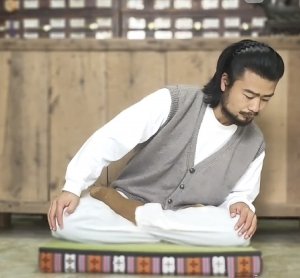
Hip circles or Huang Hai is one of the traditional Taoist qigong practice that originates from China. It also known as the “Shaking Sea or Rocking Sea Qigong”, which refers to the idea of shaking or rocking body in circles as if you were sitting in the midst of the waves of sea.
The practice involves slow, rhythmic movements coupled with proper breathing technques that are designed to promote physical relaxation, mental concentration, and cultivation of the ‘Qi’ (life energy), which helps stimulate body’s energy channels, improve circulation, and promote overall health and well-being.
Hip circles can be practiced by people of all ages and fitness levels, it has the function of strengthening the waist and kidney, downwardly leading the inner heat, and replenishing Yang energy. It can effectively relieve lumbar muscle strain, lower back pain and other discomfort caused by prolonged sitting. Continuous practice can also help soothe nerves and aid your sleep, calm the mind and nourish the heart, strengthen internal organs, and regulate the triple burner.
This practice is easy to learn and you can practice it anytime and anywhere at your own comfort and convenience.
Eight-Section Brocade (Ba Duan Jin Qigong)
Ba Duan Jin Qigong existed before Song dynasty of China, which was more than 1000 years ago. It is actually a set of eight sections of traditional Chinese Qigong exercises with medical benefits, and each piece of exercise is independent of the others and targets one area of the body, but all eight segments together are complete and well-organised for the entire body system.
Ba Duan Jin is simple health care Qigong, and known for its ability to benefit various aspects of health, including improving circulation, boosting the immune system, reducing stress and anxiety, and promoting a sense of calm and relaxation. It is also an effective form of exercise for people of all ages and fitness levels.
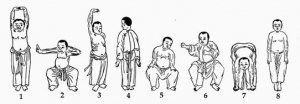
The practice is easy to learn as it involves a series of slow, gentle movements that are coordinated with deep breathing techniques and mental focus. Each of the eight exercises targets a different aspect of the body and aims to promote flexibility, balance, strength, and vitality. The movements developed in a specific order, with each exercise building upon the previous one to create a flowing sequence. The health benefits and ease of practice makes it an excellent choice for anyone whom looking to improve their overall well-being through gentle movement and focused breathing techniques.
The above drawing was culled from https://www.risingmoontaichi.net/baduanjin.
Standing Stake (Zhan Zhuang)
Zhan Zhuang translates to “standing like a stake” or “standing like a post” in English. It is a type of standing meditation and exercise based on the principles of traditional Chinese medicine (TCM) and internal martial arts, which emphasises the cultivation of qi and the balance of Yin and Yang in the body.
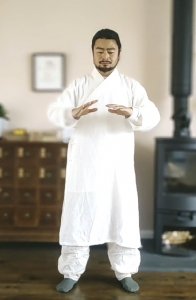 The first stage of standing meditation, also called the preparation stage, called Qi Regulation. In terms of actions, it involves ascending/descending and opening/closing. Ascending/descending is to regulate the Qi flowing upward and downward within the body. Opening/closing is to regulate the internal and external Qi of the body. Then the Qi movement will reach to a smooth, peaceful and comfortable state. When Qi regulation is complete, you may start standing meditation.
There are many different postures and techniques used in Zhan Zhuang practice, but they generally involve standing with the feet shoulder-width apart, the knees slightly bent, and the arms held in specific positions. The practitioner may hold the posture for several minutes or even hours, gradually building up their endurance over time so as to cultivate internal strength, improve balance and coordination. These positions are aimed to help open up the meridians (energy channels) in the body and to promote the flow of Qi.
The benefits of standing stake practice has many, which includes improving physical health, increasing energy and vitality, getting better concentration and mental clarity, reducing stress and anxiety, and a greater sense of overall well-being. It is considered as a low-impact exercise that can be practiced by people of all ages and fitness levels. However, it is important to learn the proper techniques and postures from a qualified instructor to avoid injury and get the most out of the practice.
Waving Dragon Qigong (Long Bei Gong)
 Waving dragon practice is a type of qigong exercise that originates from the Taoist tradition. It also known as “Dragon Back Qigong” or “Waving Dragon Qigong.” The exercise involves standing upright and waving the whole body from top to bottom while keeping the feet planted on the ground, like a dragon swimming upward.
The waving motion can help stimulating the flow of qi throughout the body, particularly along the spine. Practitioners of Long Bei Gong believe that this exercise can help improving physical health, increasing flexibility and strength, and promoting mental clarity and relaxation.
The practice is often combined with other qigong exercises and breathing techniques to form a comprehensive system of health and wellness. It is suitable for people of all ages and fitness levels and could be practiced both indoors and outdoors.
Patting Therapy (Pai Da Gong)
Taoist patting therapy, also known as Pai Da Gong, is a traditional Chinese healing technique that involves tapping, slapping, and patting different parts of the body with hands or a soft tool to improve blood circulation, to relieve pain, and to promote overall health and well-being.
Taoist patting therapy is a non-invasive and drug-free practice that can be used to treat a wide range of health issues, including muscle and joint pain, digestive disorders, respiratory problems, and stress-related illnesses. It is also believed to help boost the immune system, to increase energy levels, and to improve better sleep.
The practice of Taoist patting therapy involves a series of rhythmic and repetitive movements that helps on specific areas of the body, such as the back, legs, arms, and abdomen. The therapy could be performed by a trained practitioner or self-administered at home with proper guidance.